From Engagement to True Interest: The New Rules of Meta for D2C Brands
Why relevance, creative diversity, and partnership ads now drive performance
share
date
26.02.26
AUTHOR
Ivo McDonald

Introduction
Every so often, Meta ships an update that quietly changes the rules of the game.
Not in the “new button in Ads Manager” sense, but in the deeper sense of what the algorithm rewards, what it learns, and how it decides which brands deserve reach in the first place.
If you run a lifestyle D2C brand, this matters more than it might sound. Lifestyle brands do not win because they have the cheapest CPMs. They win because they build a distinctive identity, speak to a specific type of person, and make that person feel understood. When Meta changes how it understands “relevance”, it changes what your creative strategy should look like.
The most interesting shift at the moment is this: Meta is moving away from proxy signals (engagement) and towards direct signals (interest alignment).
Let’s unpack what that means, and what you should do with it.
User True Interest Survey (UTIS)

Why guess when you can just ask? Meta has started asking users directly how much they like what they're seeing.
Meta’s engineering team recently published a deep dive on a new model powering Facebook Reels recommendations called the User True Interest Survey (UTIS). In short, Meta now asks a random subset of users a simple question while they’re watching Reels: “To what extent does this video match your interests?” on a 1 to 5 scale.
That sounds almost too obvious. Why rely on likes, shares, and watch time when you can just ask?
But that is exactly the point. Engagement has always been an imperfect proxy for interest. People watch things they do not like. They share things ironically. They comment on content they disagree with. Meta has effectively admitted that “activity signals” do not always tell the truth, so it’s building a “perception layer” on top of them.
From an advertiser's perspective, the takeaway is simple: generic viral content becomes less valuable over time, while niche relevance becomes more valuable.
What UTIS Means for Lifestyle Brands

Hackett London x Carl Friedrik lifestyle image. Image source: here.
Lifestyle D2C brands have historically leaned on two broad organic approaches:
Trend-led content designed to maximise reach
Identity-led content designed to resonate with a narrower group
Both can work, but they train the algorithm very differently.
If your organic strategy is mostly trend-jacking, broad humour, and “relatable” hooks that could apply to anyone, you may get reach, but you also risk teaching Meta that your brand is for everyone. And in marketing, “for everyone” usually translates to “for no one”.
If UTIS becomes a stronger steering signal, then the organic brands that win will look less like entertainment pages and more like sharp, specific points of view.
This is why we keep coming back to the same principle: creative is targeting.
Not in the old interest-targeting sense, but in the sense that your content’s attributes (persona, context, emotional tone, problem being solved, style, pacing) tell Meta who you are relevant to.
Meta’s new feedback loop simply makes that more explicit.
Implications for Paid

Meta's Andromeda algorithm has fundamentally shifted how paid works. In a nutshell, your creative does the targeting, not your media buyer.
If UTIS is the organic proof point, Andromeda is the paid equivalent.
Meta describes Andromeda as a next-generation ads retrieval engine that improves personalisation and efficiency. The key idea for advertisers is not the hardware or the architecture, it’s the behavioural implication: the platform is increasingly optimising delivery through creative signals, not manual audience segmentation.
In other words, the long-term trend is clear:
Less reliance on “finding the right audience” in Ads Manager
More reliance on “showing the right story” through creative diversity
Which leads to an uncomfortable truth for many brands: your targeting problems are often creative problems in disguise.
Partnership Ads
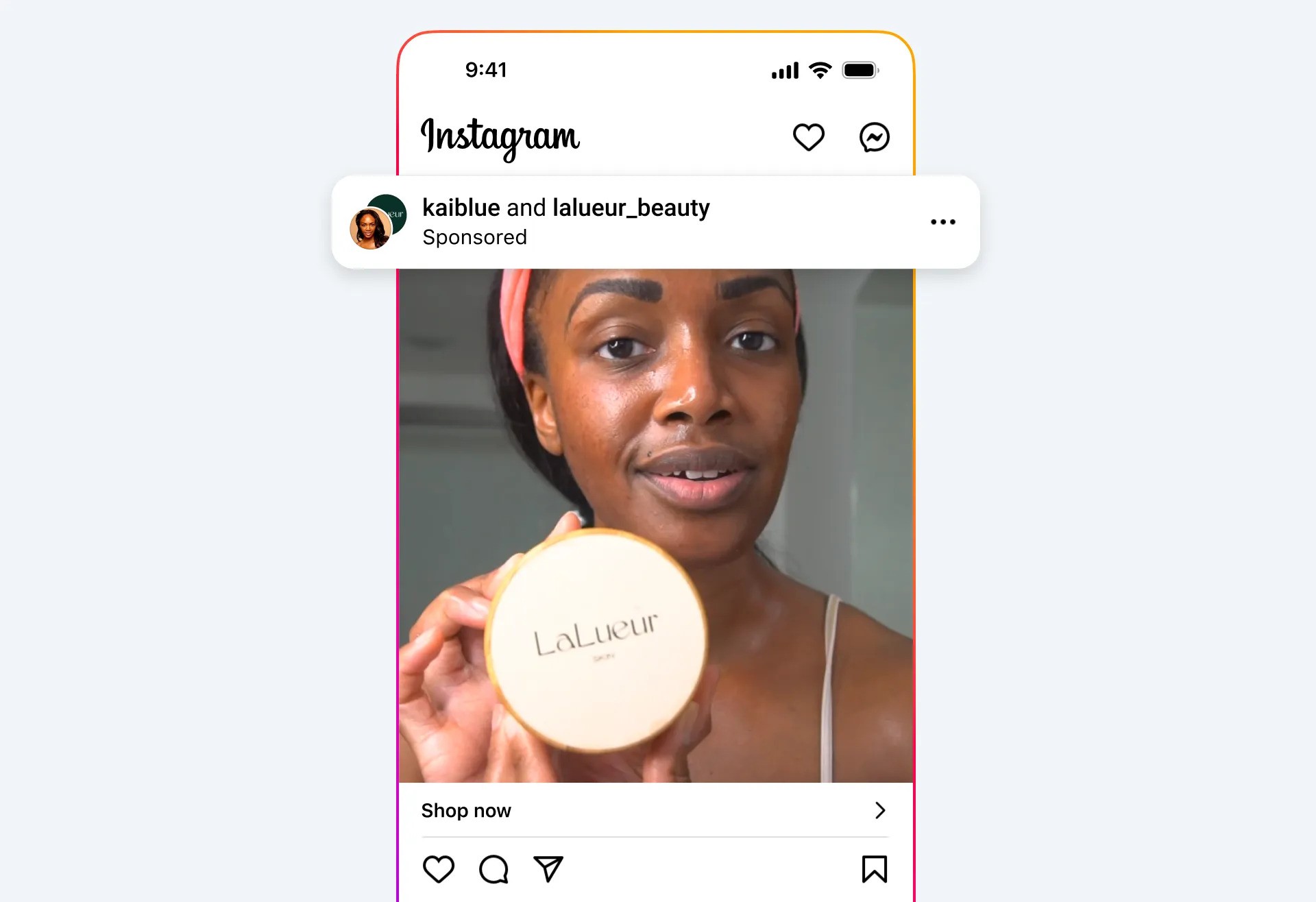
Partnership ads allow brands to co-advertise with creators. Image source: here.
If creative diversity is the engine, partnership ads are one of the best accelerators.
Why? Because lifestyle brands often need trust before they can convert. A brand page can build trust, but a person can shortcut it. The same message delivered through a creator, customer, founder, or community figure often lands differently, even if the footage is similar.
Partnership ads also solve a separate problem that hits scaling brands hard: creative fatigue and audience saturation. A third-party identity introduces novelty, new social context, and a different “why should I believe you?” dynamic.
Meta has been investing heavily in creator tooling and distribution across its ecosystem, and the brands that build a repeatable partnership pipeline tend to find a new ceiling.
The point is not to slap partnership labels onto everything. The point is to treat partnerships as a structured system for:
increasing trust
increasing creative breadth
increasing the number of distinct “entry points” into your brand story
Key Considerations

Creative strategy should follow the shape of a tree: brand strategy as the trunk, macro personas as the main branches, micro personas extending from them, then core tensions, angles, and finally the individual creative expressions that grow from each layer.
So, if you run a lifestyle D2C brand and you want a practical way to respond to these shifts, here are the key questions we would ask.
1. Is your creative strategy persona-led or trend-led?
Trend-led can drive reach. Persona-led drives relevance.
If Meta is optimising more aggressively for “true interest”, relevance will compound.
2. Do you have enough creative diversity, or just more creative?
Volume is not the same as diversity.
Ten videos that all speak to the same person, in the same context, with the same emotional tone, are not ten new learning opportunities. They are one learning opportunity repeated ten times.
3. Are your paid and organic teams feeding each other?
If organic becomes part of how Meta understands your brand, then organic should not sit in a separate universe.
At minimum, the persona framework, messaging pillars, and creative learnings should be shared.
4. Are you under-invested in partnership ads?
Most brands are.
If less than ~10% of your spend is going through non-brand identities (creators, founders, customers, collaborators), you are probably leaving performance headroom on the table.
Our Recommendations

Successful creative strategies now start with the who. Not at a surface, demographic level, but at a deep psychographic level.
If you want a simple action plan, start here.
Step 1: Build a persona map that is actually useful
Most persona docs are demographic spreadsheets dressed up as strategy.
What you want instead is a small number of macro personas, each broken into micro personas based on differences in:
primary desire
primary fear
belief system
failed solutions
identity language
This is the raw material for creative diversity that still feels coherent.
Step 2: Rebuild your creative testing around “persona x angle x vehicle”
This is the simplest way we know to create diversity without chaos.
Persona: who is it for?
Angle: what are we saying that will matter to them?
Vehicle: what format and context will make it land?
Do this across organic and paid, and you start creating a consistent signal environment.
Step 3: Build a partnership pipeline, not a one-off creator test
The brands that win do not “try creators”. They operationalise creators.
That means:
a repeatable sourcing process
clear whitelisting rights
a way to brief creators by persona, not by “make something that converts”
a system for scaling winners and iterating failures
Step 4: Fix message congruency from ad to landing page
Meta can get the right person to your site. It cannot make your site do the selling.
If your ads are persona-specific but your landing pages are generic, you are creating friction at the exact moment intent is highest.
Conclusion
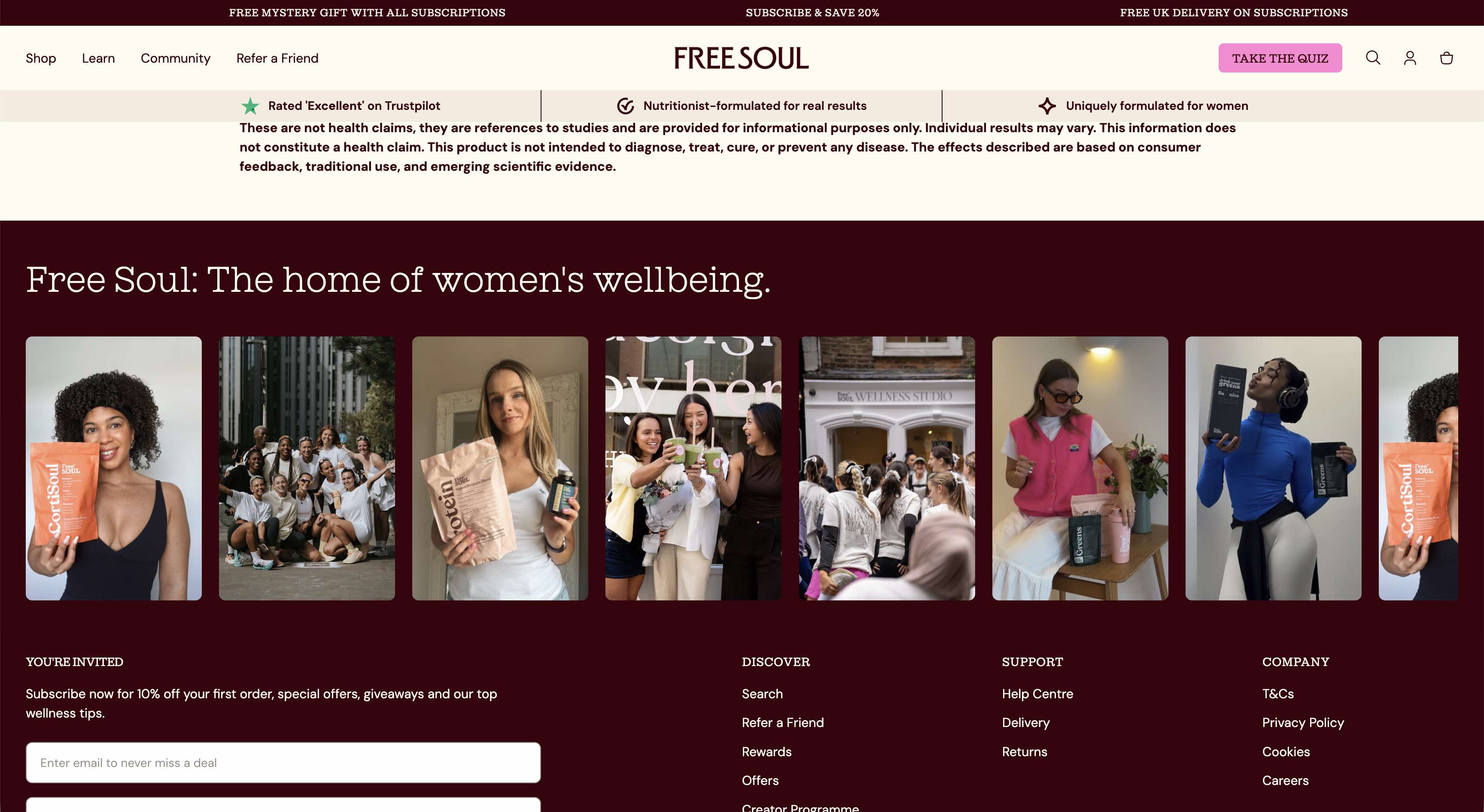
Fast-growing brands like Free Soul have an ultra-precise understanding of who they're speaking to.
Meta’s direction is not subtle anymore.
It is building systems that reward relevance over generalised engagement, and that learn your brand through the stories you tell, both in organic and in paid. UTIS is the clearest example we have seen of Meta putting “true interest” at the centre of distribution.
For lifestyle D2C brands, the opportunity is significant, but the bar is rising.
The next era is not about hacking the algorithm. It is about giving the algorithm better information: clearer personas, sharper messaging, and more diverse creative expressions of what your brand actually stands for.
If you want us to pressure-test your current creative system, identify where you are under-diversified, and map out a partnership ads plan that scales, get in touch.